

Smart Water Monitoring | Protect Water & Infrastructure
Protecting Every Drop with Smart Technology.
Smart Water Monitoring: Enhancing Water Quality and Infrastructure Protection
Why Remote Monitoring Matters
Water is one of our most precious and limited resources. Yet, maintaining its quality and managing distribution infrastructure remains a major global challenge. Urbanisation, climate change, and ageing infrastructure demand smarter solutions. That’s where Smart Water Monitoring comes in.
Using remote sensing, IoT technologies, and real-time data analytics, water utilities and municipalities can now monitor everything from quality metrics to pipeline integrity, ensuring early detection, cost savings, and improved sustainability.
The Crisis of Ageing Infrastructure
South Africa faces a particularly urgent situation. Over 40% of treated water is lost due to:
- Leaking pipes
- Theft
- Infrastructure inefficiencies
These losses equate to billions of Rands in non-revenue water annually. One of the biggest culprits? Corrosion.
The Freshwater Crisis
- Only 3% of Earth’s water is freshwater.
- Most of it is inaccessible, trapped in ice caps or deep underground.
- What’s left — just 0.4% — must support over 8 billion people.
- Pollution further limits what’s usable. (Source: World Atlas, 2018)
The Infrastructure Challenge: Corrosion & Water Loss
In South Africa, over 40% of treated water is lost due to:
- Leaks
- Theft
- Inefficient infrastructure
This results in billions in non-revenue water losses.
What is Corrosion and Why Should You Care?
Corrosion is the natural breakdown of materials—especially metals—through electrochemical reactions. It’s accelerated by water, oxygen, chemicals, and environmental conditions. In pipelines and tanks, corrosion weakens the structure, causing leaks or even catastrophic failure.
- Globally, the economic loss due to corrosion exceeds $2.5 trillion annually.
- In South Africa, it’s estimated to cost R130 billion—about 4% of GDP. (Source: The Corrosion Institute of South Africa)
Solutions: Preventing Water Infrastructure Damage
To fight corrosion and water loss, the industry uses several technologies:
- Protective Coatings – Paints and films prevent direct contact with moisture and chemicals.
- Hot-Dip Galvanising – A zinc coating is applied to steel to act as a barrier.
- Corrosion Inhibitors – Chemicals injected into pipelines to neutralise corrosive elements.
- Cathodic Protection – Uses electrical current to redirect corrosion away from the main asset.
- Anodic Protection – Similar to cathodic, but applied in reverse conditions.
- Real-Time Corrosion Monitoring – Using smart sensors to detect early signs of breakdown.
Global cost: Over US$2.5 trillion
🇿🇦 South Africa’s cost: ~R130 billion annually (~4% of GDP)
(Source: The Corrosion Institute of South Africa)
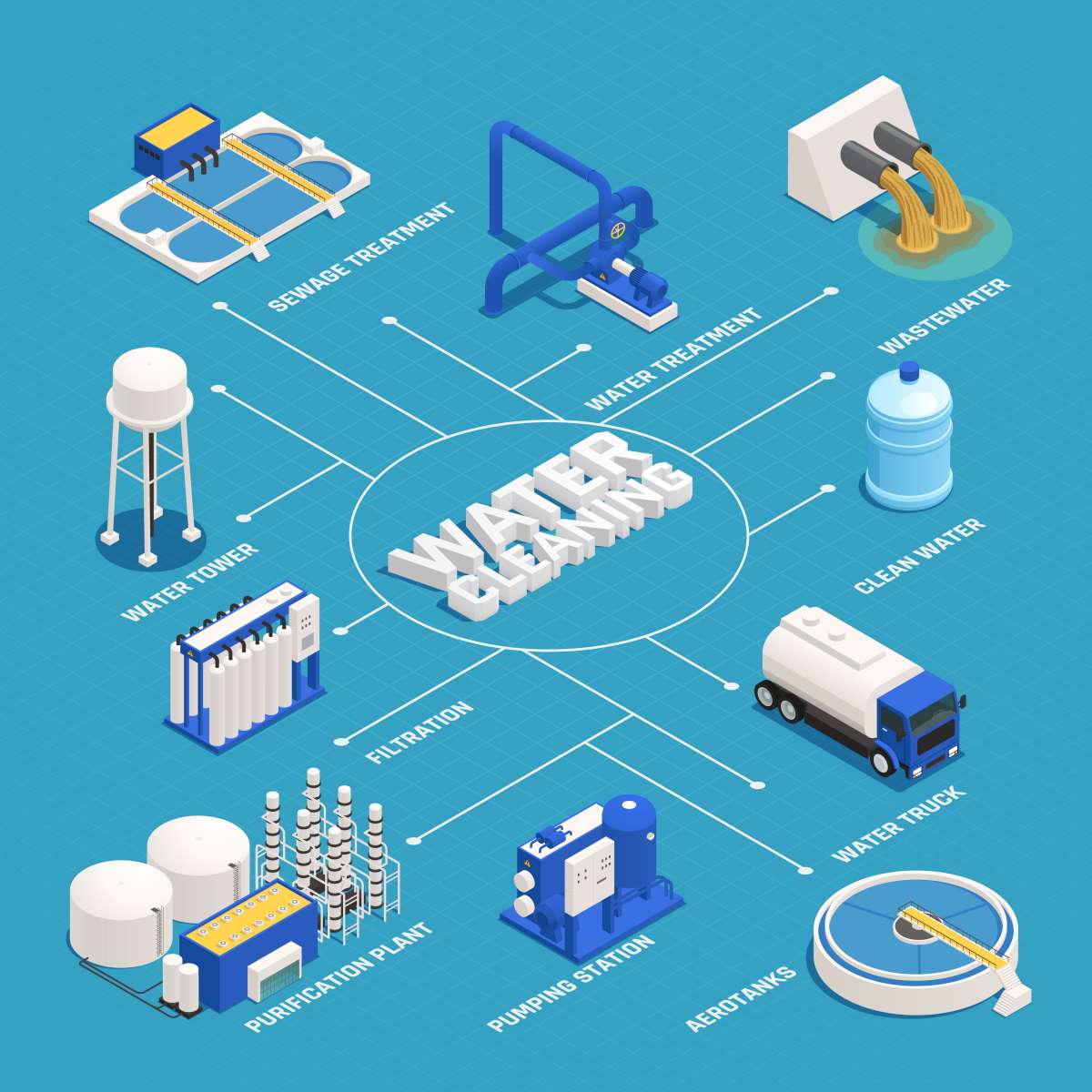
What is Smart Water Monitoring?
Smart water monitoring refers to the use of IoT-enabled sensors, cloud-based software, and automated systems to:
- Monitor water quality parameters (pH, turbidity, temperature, DO)
- Detect pipeline leaks
- Track flow rates and pressure levels
- Prevent and predict corrosion
- Enable remote access and control
These systems deliver instant data, early warnings, and valuable insights. They transform reactive water management into a proactive, predictive process.
Focus Areas:
- Water Quality: pH, turbidity, dissolved oxygen (DO)
- Infrastructure Monitoring: Cathodic Protection systems for corrosion
Technologies Behind Smart Water Monitoring
Adroit Technologies has partnered with VisioSoft to deliver state-of-the-art smart water solutions. Together, they integrate hardware, connectivity, and software to deliver reliable real-time water intelligence.
Remote Sensing & Connectivity
- Wireless Protocols: GSM, LoRa, Sigfox, Satellite
- Sensors: Chemical, electrochemical, optical
- Platforms: OQLIS dashboards, Adroit SCADA, mobile apps (Adroit Air)
- Power: Solar or battery-operated for remote resilience
Devices & Systems
VisioHub WaterQ:
- Wireless communication
- Monitors: pH, ORP, EC, Temp, Flow, Pressure
- Various probe options
VisioHub 3 Analog Input CP:
- Monitors analog input ranges (0–10V, 0–100mV)
- Offers robust power solutions
Communication Protocols:
- GSM / 4G LTE
- LoRa / Sigfox (for low-power remote networks)
- Satellite (for off-grid locations)
Power Options:
- Solar-powered
- Long-life battery systems
- Hybrid power sources
Data Platforms:
- Adroit SCADA – Enterprise-level monitoring and control system
- Adroit Air Mobile App – For on-the-go access
- OQLIS Dashboards – Cloud-based data visualisation and analytics
- VisioConnect – Backend data management and integration layer
These technologies are built to be modular, allowing clients to scale from a small municipal application to a nationwide smart water grid.
Key Considerations in Deployment
- Harsh environmental conditions
- Regular sensor calibration and maintenance
- Connectivity limitations in rural/remote areas
- Cybersecurity threats to infrastructure
How Smart Water Monitoring Works
- Sensors are installed at key infrastructure points (e.g., water treatment, reservoirs, pipelines).
- Data is collected in real time and transmitted via wireless networks to a central server or cloud.
- The information is processed, analysed, and displayed on dashboards or SCADA systems.
- If anomalies are detected (e.g., pressure drop, pH imbalance), alerts are triggered.
- Teams are notified instantly, allowing for remote diagnostics and rapid response.
Real-World Challenges
Deploying smart water systems comes with its own set of considerations:
- Harsh environments: Weatherproofing and rugged casing are essential.
- Calibration: Sensors must be periodically calibrated to maintain accuracy.
- Connectivity gaps: Remote or rural areas require robust communication options.
- Cybersecurity: As infrastructure goes digital, security must be a top priority.
Adroit Technologies addresses these challenges through custom designs and secure architectures.
Future Trends in Smart Water Tech
The future of smart water is bright:
- AI and Predictive Analytics: Automated risk alerts (via Adroit Cloud)
- GIS Integration: For real-time geographic awareness
- Smart Cities & Drones: Inspections via autonomous robots
- Affordable Sensors: Greater accessibility and performance
Future of Water: What’s Next?
Smart Cities Integration – Systems like Adroit SCADA integrate with GIS and smart city dashboards for holistic planning. AI & Predictive Maintenance – AI models using Adroit Cloud will soon predict failures before they occur. Autonomous Inspection – Drones and robots will handle tasks like pipeline checks and sensor cleaning. Cost Efficiency – Continued innovation will drive down costs, making smart monitoring accessible even to rural municipalities.
See It in Action
Live Demonstrations Available:- contact us at info@adroit.co.za to book a demonstration.
- HTML5 SCADA Interface (WaterQ View)
- VisioConnect backend processing
- OQLIS Cloud Reporting
- Mobile-first dashboards via Adroit Air
With the right technologies and strategies, we can build a smarter, safer, and more water-secure future.
Conclusion
Smart Water Monitoring isn’t just a trend—it’s a necessity. As water becomes scarcer and infrastructure continues to age, modern solutions like IoT and SCADA offer the scalability, efficiency, and precision needed to safeguard our most vital resource. Whether you’re a municipality, utility provider, or private sector operator, investing in smart water systems helps protect your assets and ensures long-term sustainability.
- Enable real-time insights
- Reduce loss and inefficiencies
- Ensure sustainability
- Protect infrastructure investment
With the right technologies and strategies, we can build a smarter, safer, and more water-secure future.